The Insane Idea of Road-Tripping a Tesla to the French Riviera
Or: How I Stopped Worrying and Learned to Love Coffee Breaks Every 300 Kilometers.
Look, I'm not gonna sugarcoat this. Before this trip, I was a skeptic. A regular, gasoline-powered skeptic — you know the type, the one who looks at an EV and goes, “What if my battery dies on the highway?” Exactly. Except I haven't had a highway in my head for two years. I've got a Tesla Model 3 in the Standard Range trim — the smallest battery they offer. The smallest. Just to make it funnier.
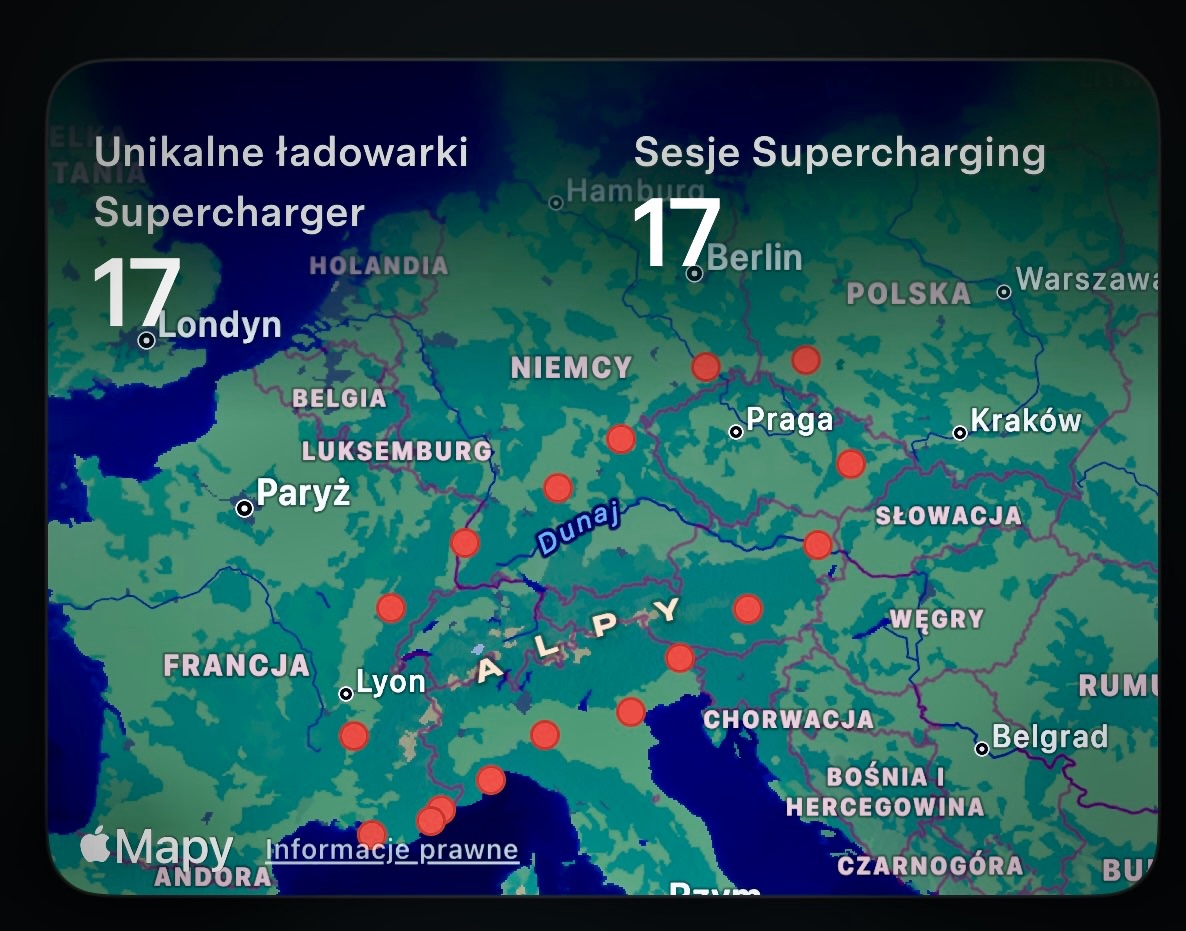
And I drove it to the French Riviera. From Poland. In a heat wave. Three days.
And you know what? It was chill.
The plan was simple (like every plan before a road trip)
Route: Poland → France → French Riviera → back. Roughly 4,500+ kilometers round trip. In my head I had a calculator and a Supercharger map, and in my heart — a mild sense of dread. Because Standard Range isn't exactly the trim for people who want to drive without thinking. It's the trim for people who like thinking while they drive.
Stops roughly every 300 kilometers. That's what this battery realistically gives you at highway speeds with the AC blasting — because it was 39 degrees outside and I wasn't about to marinate in my own sweat.
Seventeen charging sessions and not a single panic attack
Here's a little stat, because the numbers impress even me:
- 17 unique Supercharger locations
- 17 charging sessions
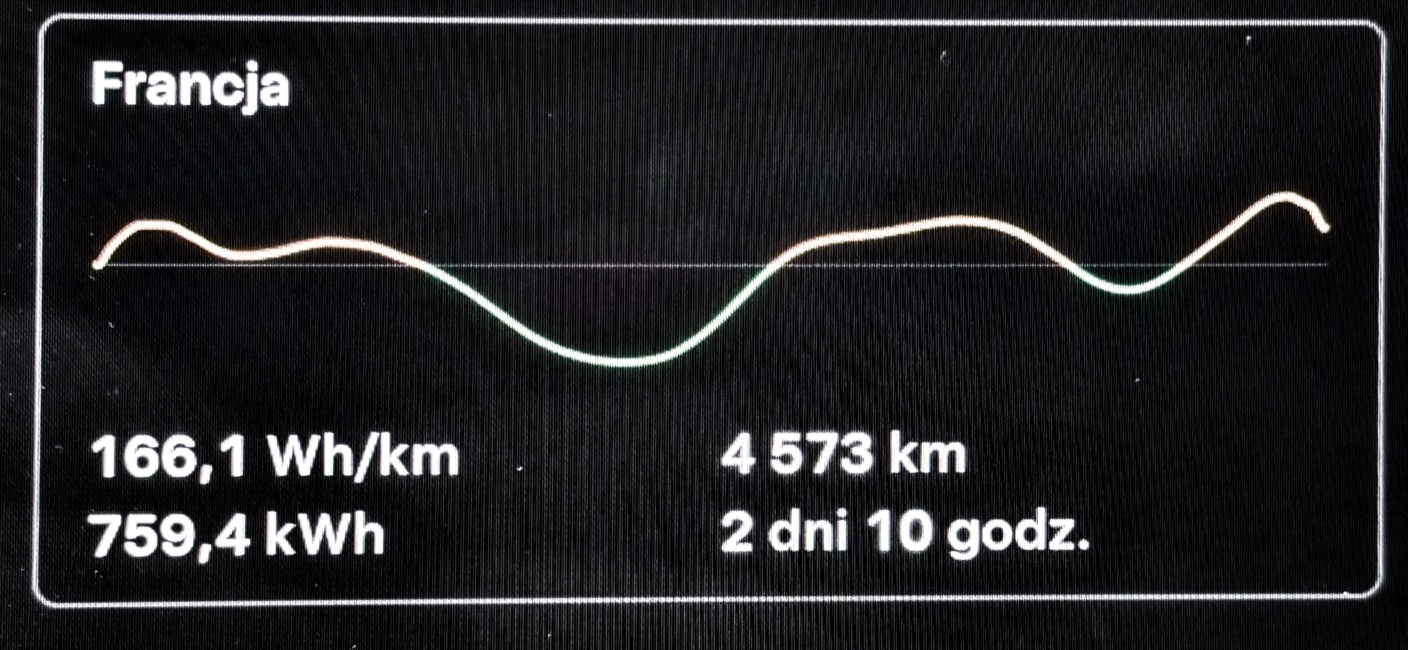
- Average consumption: 166.1 Wh/km
- Total consumption: 759.4 kWh
- Driving time: 2 days and 10 hours (the entire route)
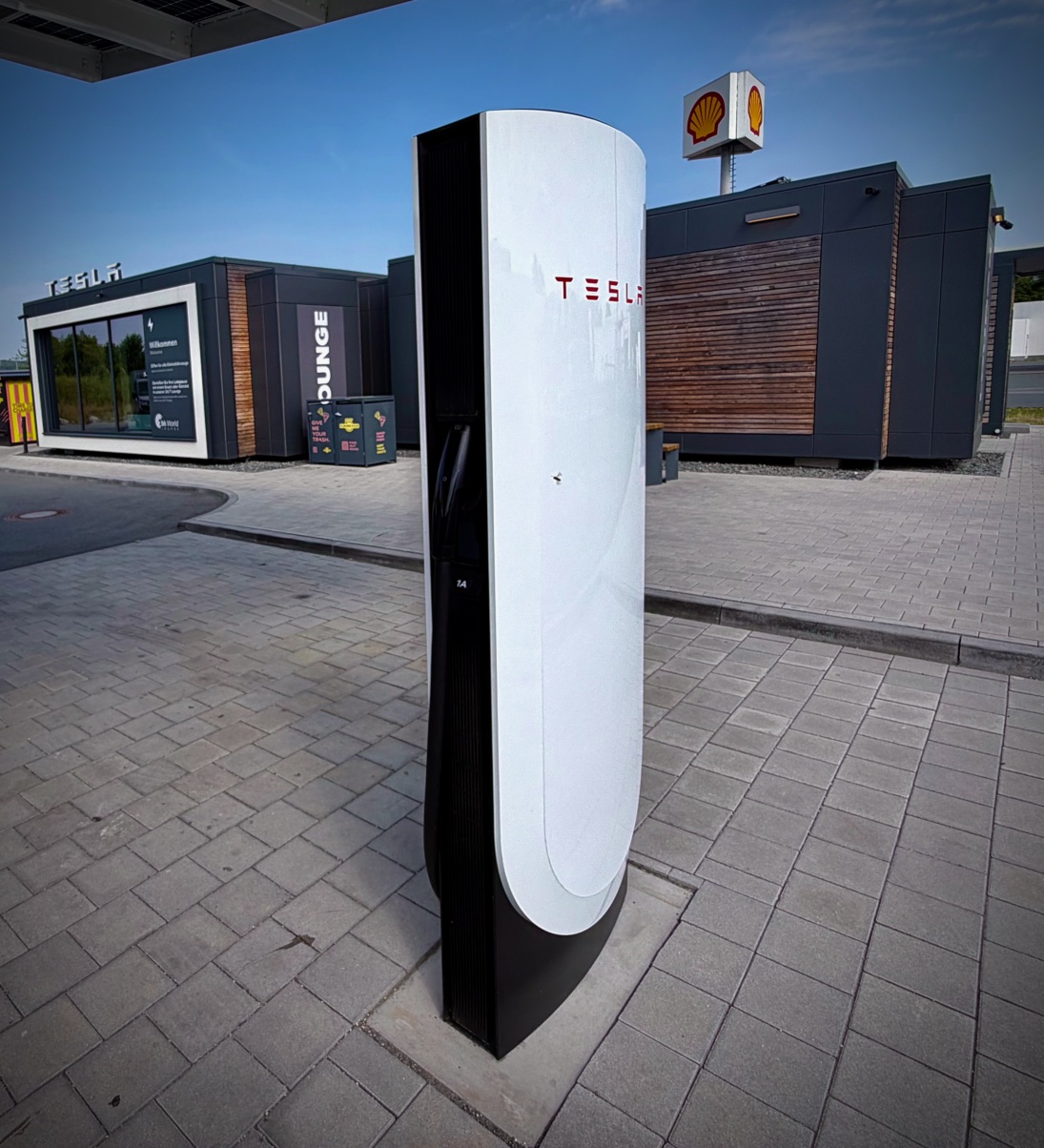
Each charge was about 45 kWh, which is roughly 20 minutes at the charger. Twenty minutes! That's the perfect window to stretch your legs, grab a coffee, hit the bathroom, and scroll your phone without feeling guilty. You don't have to stand next to your car like a prison guard — you walk into the building labeled “LOUNGE,” sit down, drink an espresso, and a few minutes later you're back in the car with enough juice for the next leg.
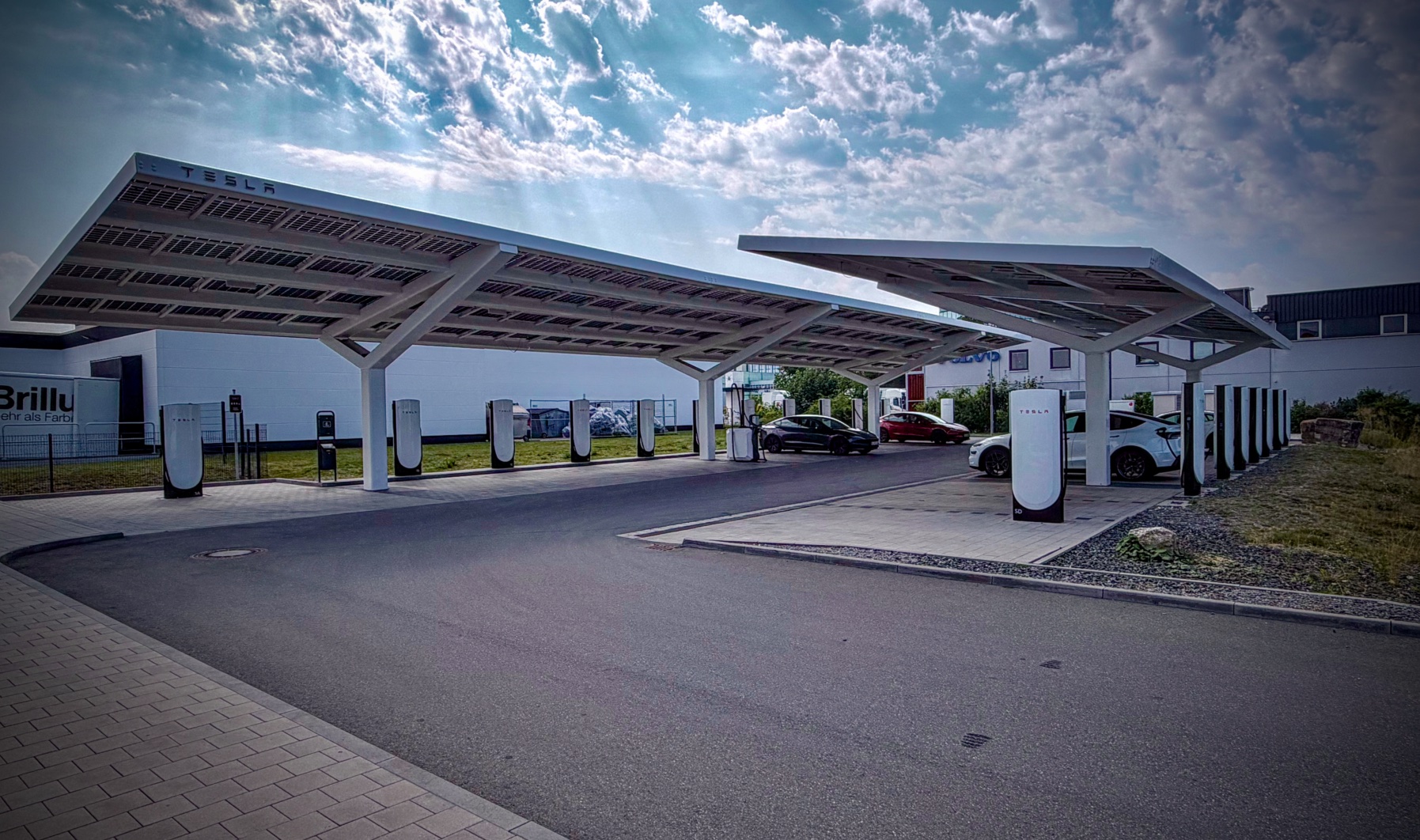
And the Superchargers? Most of them are in places where you'd never stop a gas car for more than a minute. But here you're parked for twenty minutes and suddenly you notice solar panels on the canopy roofs, clean stalls, interesting architecture around you. This isn't a “gas station.” It's something else. Something nicer than the smell of engine oil at six in the morning.
The money thing (because everyone asks)
Fuel on this route would've cost around €2.2 per liter — if you're into those comparisons. And me? I charged in the evenings and overnight, when Supercharger prices drop to absurdly low levels. Seriously — some people pay more for parking at a Biedronka than I paid to drive three hundred kilometers on electricity at ten p.m.
I'm not gonna build a complicated spreadsheet with a calculator here — because every situation is different and everyone has different home electricity rates or charging preferences. But the fact is: for this route and these conditions, the bill was pleasantly low. Low enough that I started wondering if there was some glitch in Tesla's billing system. There wasn't. That's just how evening Supercharger pricing works.
Thirty-nine degrees and the “cool the car before you get in” feature
This is a feature you only appreciate after three days of driving in heat above thirty degrees. You get in the car and it's already cool. You don't have to spend five minutes ventilating the interior like a sauna on Krupówki in January — you just walk in and drive like a civilized twenty-first-century human.
The AC had a full workload the entire trip — at thirty-nine degrees outside, the battery wasn't as generous as usual, hence the stops every three hundred kilometers instead of four or five hundred. But it worked. Calmly, stress-free, without calculating “will I make it to the next town.” I made it to the next Supercharger — which is the same town as the next Supercharger, so everything checked out logically.
What surprised me the most?
The calm of the whole trip. Seriously. Before leaving, I had this vision of helpless tears over a dead battery on a German autobahn at three a.m. (classic internet forum scenario). And it turned out to be just… a trip with regular rest stops? Which is actually healthy? People drive gas cars five hundred kilometers without stopping and end up with back pain, while I was grabbing a coffee, taking a walk, stretching my back every three hundred kilometers, and getting back in the car feeling refreshed? Who's the dumb one here?
Would I recommend this trip in an EV?
If you've got a Tesla Model 3 Standard Range and want to drive to the French Riviera in July — yes, I'd recommend it. You'll need to plan stops roughly every three hundred kilometers, but those stops are pleasant, cheap, and give you a reason to get out of the car before four hours of sitting (which doctors probably recommend? or should?).
Will it be as stress-free as driving a diesel a thousand kilometers on one tank? No. Let's be naive, but will it be worse? No. It'll be different, calmer, cheaper, and a little more civilized. Because a twenty-minute break every three hundred kilometers isn't a punishment. It's an excuse to slow down for a while. And that's something you can't convert into euros per kilowatt-hour.