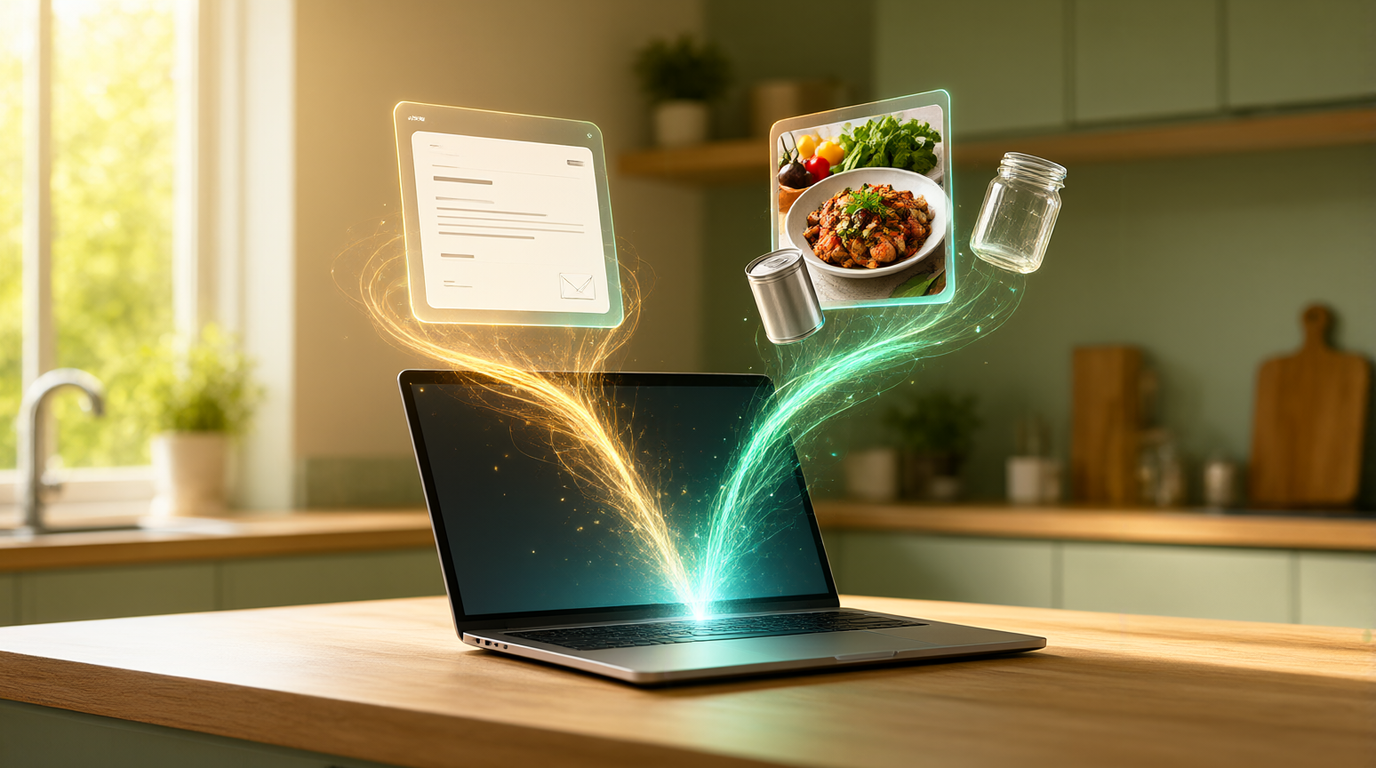
My Quiet Assistant, or How AI Quietly Took Over My Chores
Here's how artificial intelligence crept into my daily routine and why I think everyone should give it a chance.
If you've read my article about swapping crowded buses for a bike or about AI tutoring, you already know a certain pattern: I love finding ways to live more comfortably, more smartly, and simply reclaim some precious time. Today is the next episode in that series — about my quiet, digital assistant.
Just a year ago, the words “artificial intelligence” mainly made me think of sci-fi movies and complicated algorithms for programmers. It seemed like technology for big corporations and gadget enthusiasts. Today? AI is my invisible, quiet assistant.
No, I don't have a humanoid robot from a sci-fi movie at home, though the robot vacuum and mopping robot that you can start with a single button have long since settled into my home. But when it comes to more organizational and creative tasks, digital assistants come to the rescue. Most of us are probably familiar with popular tools like ChatGPT or Gemini, but recently I discovered an interesting corner of the internet — the Hanah.fun platform. In one place, I have access to specialized virtual helpers for special tasks — from a chef suggesting recipes and a private tutor, to a legal advisor, all the way to a supportive psychologist. This clever convenience saves me 15 to 45 minutes every day. Add that up over a month — that's over a dozen full hours of reclaimed life!
Zero-waste kitchen without the headache
You know that feeling when you come home after a long day, open the fridge, and see total chaos? Half a ripe bell pepper, a lonely container of plain yogurt, wilting parsley, and a can of chickpeas. I used to give up in moments like that — it would end with either pricier takeout or throwing out food that had simply gone bad.
Now I type the ingredients into a chat (or take a photo of the inside of the fridge) with a simple request:
“Turn this into a quick, tasty, and filling dinner for 4 people in 20 minutes max. I have basic spices.”
The result? Recipes I would never have come up with myself — a creamy sauce made from roasted bell pepper and yogurt for the chickpeas turned out to be surprisingly good. Zero wasted food and, most importantly, no decision fatigue after a full day of work.
Finances and shopping under control
I always put budget planning off until “later.” And reading hundreds of reviews before buying a blender? Not for me!
Now it looks like this:
- Shopping lists assemble themselves. I drop in my meal plan for the week and the assistant generates a list grouped by aisle — vegetables, dairy, dry goods. I walk into the store and walk out at record speed.
- Comparisons in 15 seconds. Instead of digging through dozens of forums and sponsored articles, I asked: “Put together a table of pros and cons for 3 blender models under 300 zł, focusing on thick smoothies and ease of cleaning.” I got a clear summary and made my decision on the spot.
A clear head and an end to exhausting decisions
By the end of the day, my brain tends to be overstimulated. A tricky formal email to a government office? A schedule for a packed week? Chaotic meeting notes?
I do something I call “dumping the thoughts out of my head.” I type in a jumbled stream of sentences, doubts, and keywords — and in return I get an elegantly formatted message ready to send, a readable list of priorities, or the key takeaways from a document I don't have the energy to read in full.
All I do is make minor tweaks. Instead of agonizing over a single email for half an hour, I wrap it up in three minutes.
| Area of Life | How Do I Use My Digital Assistant? | Main Benefit |
|---|---|---|
| Kitchen & Diet | Generating recipes from leftovers in the fridge | Saving money and less wasted food (Zero Waste) |
| Organization | Creating schedules, summarizing long texts | A clear head and time saved in the morning |
| Writing & Communication | Editing difficult emails, drafting official letters | No stress and faster handling of paperwork |
| Work & Development | Brainstorming, looking for inspiration, learning difficult concepts | Faster learning without digging through dozens of pages |
But is it actually safe?
I often hear: “Aren't you afraid you'll stop thinking for yourself?” I understand the concern, but I see it differently. Inventing the calculator didn't take away our ability to do math in our heads, and the existence of bicycles didn't stop us from walking. Technology is meant to support the repetitive and time-consuming stuff. It provides the tools — I make the decisions.
There is, however, another side to the coin, and I'd be dishonest to skip it. In the US, the company Sequoia Benefits and Insurance Services sued a former manager over her use, during client meetings, of an unapproved AI tool that was secretly recording notes. In Poland, the law isn't lenient here either — passing company data to an external tool can end in disciplinary action. That's why an AI usage policy shouldn't stop at the question “Are employees allowed to use ChatGPT?” but should answer the question “What data may employees not share with external AI tools?”. But that's a topic big enough to deserve its own post. You'll find it on the blog soon!
The moral? My quiet assistant is supposed to help me cook and write emails. It's not supposed to listen in on work conversations without asking or learn things that are none of its business. The line is simple: private leftovers from my fridge — yes; other people's data and company secrets — no.
The golden mean: start with small steps
You don't have to reorganize your entire life right away. If you feel wary about new technology, start with one simple thing. The next time you don't know what to cook, or you're stuck on a trickier message — open a chat with a virtual assistant and just talk to it. See how it feels.
Artificial intelligence in my life isn't meant to live, feel, or build relationships for me. It's meant to take over the boring routine — the same way the dishwasher took over washing dishes by hand. Thanks to that, I have more resources for what really matters: exercise, hobbies, deep conversations with loved ones, and stress-free rest.
What about you? Are you already using AI in everyday matters, or do you still keep your distance from the whole topic? If you're just getting started, remember: one small step is enough to reclaim your first spare quarter-hours.