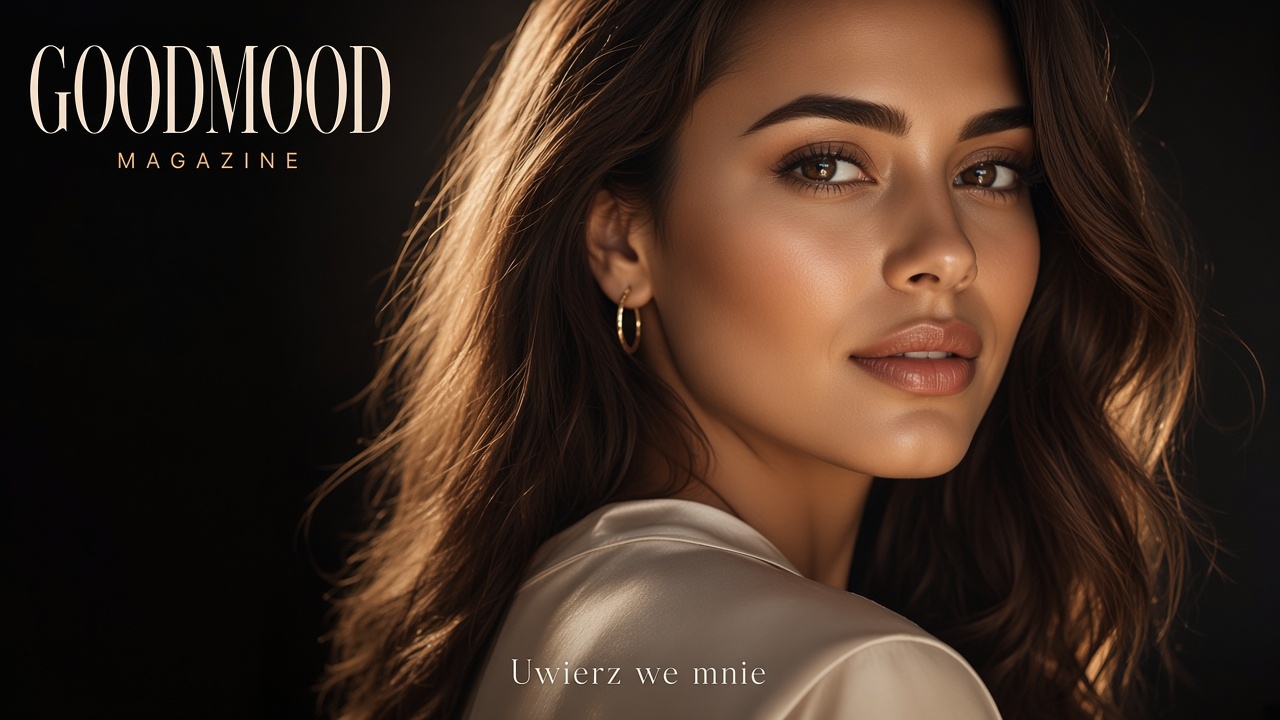
Hanah Doesn't Exist. But You Just Believed in Her
Meet Hanah.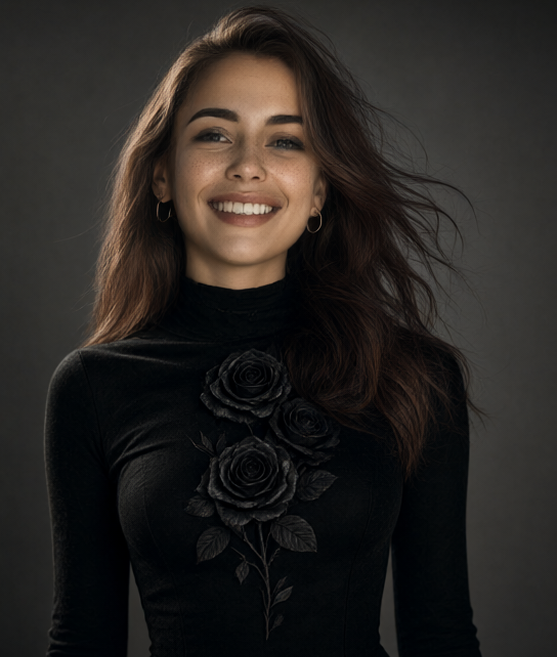
Let's start with the portrait. Dark background, soft light sculpting the features, centered composition with an accent on fabric texture. A monochromatic palette broken up by a natural skin tone. It looks like a frame from a fashion magazine shoot — the kind you scroll through an hour before bed thinking, “I want that too.”
Except Hanah doesn't have a body. There's no studio she stood in. No photographer who pressed the shutter. No name picked out by a mother. Someone typed a prompt, generated a face, saved it as a reference — and from that moment on, Hanah lives in frames that never actually happened.
From Paris, No Ticket Required
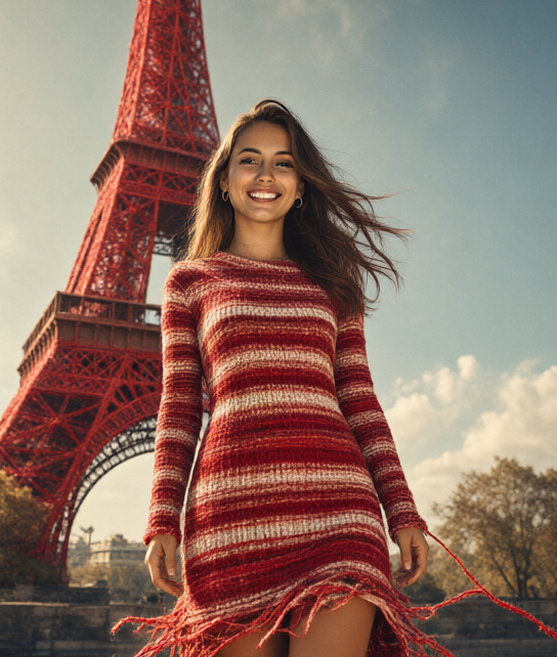
Next frame: Hanah in a red dress against a red Eiffel Tower. A low angle elongates the silhouette, shallow depth of field melts the iron into cool late-afternoon blues, and the contrast between warm red and sky looks like something off a Vogue cover.
It looks like that — because it isn't. Nobody stood there. Nobody waited for golden light at 5:43 p.m. The dress doesn't exist in any closet. The tower is in Paris, sure, but the frame was born somewhere between the model's layers and the patience of someone who knew how to steer a prompt.
And now a collage: nine portraits of the same face in nine moods.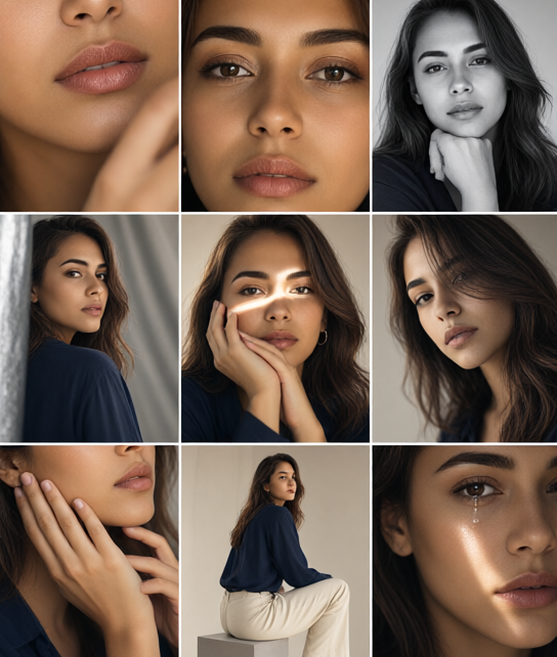
Extreme close-up on lips with a delicate touch of a hand. A look over the shoulder by a curtain, intimate mood. Slit light falling dramatically across the face. And a tear rolling down a cheek, lit from behind with warm directional light.
Nine emotions. Nine situations. One face — the same every time, because it's the same reference. The same model treats Hanah the way a good photographer treats a muse. Except the muse doesn't exist and has no opinion about being told to cry on command.
Video: “Keep up”
This is where it gets interesting — and a little less comfortable.
Hanah in a flowing red dress walks toward the camera and says “Keep up.” She steps away a few paces, the camera follows. She turns around: “That's better.” A laugh — timing and gestures like they're on a set that never existed. Then the camera stays put. We see the sun and that whole golden hour — warm, cinematic, ready to drop on Reels.
None of this happened. Nobody yelled “quiet on set.” Nobody did the take for the seventh time because the light dropped a degree too low. It's a simulation of reality so good that telling it apart from the truth takes either technical experience or skepticism — and skepticism is a resource people burn through faster than a phone battery.
This Isn't New
Before someone here starts typing a comment about “technological threat,” let's pause on something simpler: people have been doing this for years. Just by hand and with less grace.
You photograph only your face — fifty shots from different angles, one expression (smile number three), one light source (the one by the window). Then you drop yourself into stock backgrounds: Santorini, New York, some “living the dream” nonsense. You present a version of yourself without cellulite, without crow's feet, without the mess behind you. Teenagers scroll and believe. They build an image of a perfect world — a world without morning coffee spilled on a blouse and without a Thursday afternoon in an office with the AC set to “arctic.”
AI just took that process and sped it up a thousandfold. Now you don't even need a face — a prompt will do.
Where the Fun Ends
I'm not here to scare you with a deepfake apocalypse straight out of a cheap tech thriller. But let's be honest: the editing capabilities shown in this demo aren't the final stage of the tool's development — they're its showreel. If it works this well right now with one character and a few scenes, what's happening quietly behind the curtain?
Unspoken words assigned to a stranger. A film about situations that never occurred — but look documented. Stories with no witnesses, because the characters don't exist and nobody can lean on their testimony. The potential for misuse is enormous and can be dangerous not because the technology is evil, but because our ability to verify is growing slower than machines' ability to generate a convincing lie.
Hanah is pretty and likable. And nobody's going to get hurt by generating her further. But the same mechanics that give us a model in Paris without a plane ticket also give us a politician who never said a word, and a witness who was never there. And that's not a demo anymore.